The path from a molecule in a laboratory to an FDA-approved drug available to patients is one of the most complex, expensive, and high-stakes journeys in modern science. On average, it takes 10 to 15 years and costs more than $1 billion — and even then, fewer than 1 in 10 drugs that enter clinical trials ultimately reach approval. For biotech investors, understanding the full arc of the FDA approval process is essential for evaluating where a company sits in its development timeline, what catalysts are ahead, and what risks are still on the table.
The Short Answer
| The FDA drug approval process consists of five main stages: preclinical research, the IND filing and Phase 1 clinical trials, Phase 2 trials, Phase 3 pivotal trials, and the NDA or BLA review. After a company files its application, the FDA assigns a PDUFA date — its target deadline to complete the review. The process is designed to provide a systematic, evidence-based determination of whether a drug’s benefits outweigh its risks for a specific population and indication. |
The Historical Roots of FDA Drug Oversight
The FDA’s authority over drug approvals evolved through a series of crises and legislative responses over the twentieth century. The Food, Drug, and Cosmetic Act of 1938 required the first safety testing for drugs, passed after a sulfanilamide elixir killed over 100 people when manufacturers used a toxic solvent without testing it in humans. The Kefauver Harris Amendment of 1962 added the requirement that drugs also prove efficacy — not just safety — and formalized the clinical trial framework still used today.
Over subsequent decades, the FDA developed increasingly sophisticated mechanisms to balance speed and rigor: expedited programs like Fast Track and Breakthrough Therapy Designation for serious unmet needs, accelerated approval pathways for conditions where confirmatory data takes years to generate, and the PDUFA user-fee system to resource faster reviews.
Step 1 — Preclinical Research
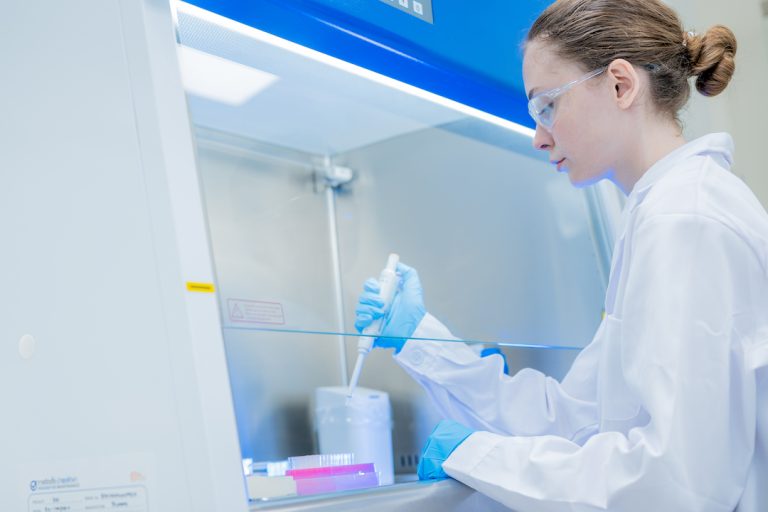
Before a drug ever enters a human, it must be studied extensively in laboratory settings and animal models. Preclinical research includes in vitro studies (cell cultures) to identify the drug’s mechanism of action and screen for toxicity, and in vivo animal studies to characterize safety at various dose levels. If preclinical data shows a promising safety and activity profile, the company compiles this data into an Investigational New Drug (IND) application and files it with the FDA.
Step 2 — IND Filing and Phase 1 Trials
The IND is the FDA’s authorization for human testing. Once the FDA reviews the IND and issues no clinical hold within 30 days, Phase 1 trials can begin. Phase 1 focuses on safety and dosing in a small group of 20 to 100 participants. If safety is acceptable, the company advances to Phase 2.
Step 3 — Phase 2 Trials
Phase 2 trials enroll 100 to 300 patients and generate the first meaningful efficacy signals in the target indication. Researchers refine the dose and continue monitoring safety. A positive Phase 2 readout — showing evidence that the drug works and is tolerable — is typically the most significant pre-approval catalyst for a clinical-stage company’s stock.
Step 4 — Phase 3 Pivotal Trials
Phase 3 is the definitive evidence-generation stage. These large, randomized, controlled studies enroll hundreds to thousands of patients and are designed to provide statistically robust proof of efficacy. The FDA typically requires at least two well-controlled pivotal studies — though this requirement may be modified for serious conditions under expedited pathways. Phase 3 trials are the most expensive phase of development and can take years to complete.
Step 5 — NDA or BLA Filing and FDA Review
Once Phase 3 data is complete, the company assembles all preclinical, clinical, and manufacturing data into a New Drug Application (NDA) for small-molecule drugs, or a Biologics License Application (BLA) for biological drugs. This application is submitted to the FDA, which has 60 days to accept it for review. Upon acceptance, the FDA sets a PDUFA date — its target deadline to complete the review — typically 10 months for a Standard Review or 6 months for a Priority Review.
During the review period, the FDA may convene an Advisory Committee meeting for input from external experts, and the company may negotiate label language with the agency. On or before the PDUFA date, the FDA issues its decision: approval, accelerated approval, or a Complete Response Letter.
What This Does Not Guarantee
| Completing every step of the process does not guarantee approval. A well-designed Phase 3 trial with a positive primary endpoint can still result in a Complete Response Letter if the FDA identifies manufacturing issues, safety signals in the full dataset, or concerns about the proposed label. The FDA’s mandate is to determine whether benefits outweigh risks — and that determination can go against a drug even after years of successful development. |
Key Takeaways
- The FDA drug approval process spans five stages: preclinical, IND/Phase 1, Phase 2, Phase 3, and NDA/BLA review
- The process takes 10–15 years on average and costs over $1 billion when accounting for failures across the portfolio
- Fewer than 1 in 10 drugs entering clinical trials ultimately receive FDA approval
- Phase 3 pivotal trials are the primary basis for the NDA or BLA application
- The PDUFA date marks the FDA’s target deadline for completing its review of the application
- The FDA can approve, conditionally approve, or issue a CRL at the end of the review
- Expedited programs — including Fast Track, Breakthrough Therapy, and Priority Review — can compress certain steps for serious unmet needs
Sources
1. FDA — The Drug Development Process: https://www.fda.gov/patients/learn-about-drug-and-device-approvals/drug-development-process
2. FDA — New Drug Application (NDA): https://www.fda.gov/drugs/types-applications/new-drug-application-nda
3. FDA — BLA (Biologics License Application): https://www.fda.gov/drugs/types-applications/biologics-license-application-bla-process-cber-regulated-products
4. Tufts Center for the Study of Drug Development — drug development cost estimates: https://csdd.tufts.edu
Disclaimer
This article is based on publicly available regulatory information, company filings, and authoritative industry sources. All information was current as of the date of publication. BioTech Stocks Daily has not received compensation from any company referenced in this article in connection with this coverage.
This article contains references to forward-looking statements and clinical projections. Forward-looking statements involve known and unknown risks and uncertainties, and actual results may differ materially from those projected. Past clinical results do not guarantee future outcomes.
The information provided in this article is for informational and educational purposes only and does not constitute financial, investment, or medical advice. Readers are encouraged to conduct their own due diligence and consult a qualified financial advisor before making any investment decision.
For full terms, see our Disclaimer.