Before a drug can be tested in a single human patient, the company developing it must file an Investigational New Drug application — commonly called an IND — with the FDA. The IND is the regulatory gateway to clinical trials. Without it, no Phase 1, Phase 2, or Phase 3 study can legally begin in the United States. For biotech investors, IND filings and clearances are meaningful milestones that signal a company has crossed a critical threshold in its drug development program.
The Short Answer
| An Investigational New Drug (IND) application is a formal submission to the FDA requesting authorization to begin human clinical trials for a drug that has shown promise in preclinical (laboratory and animal) studies. The IND includes preclinical data, the proposed clinical protocol, information about the drug’s chemistry and manufacturing, and an investigator brochure summarizing what is known about the compound. Once filed, the FDA has 30 days to review the IND and raise any concerns — if no clinical hold is issued, the company may proceed with its planned trials. |
Why the IND Requirement Exists
The IND requirement was established under the Federal Food, Drug, and Cosmetic Act, significantly strengthened after the Kefauver Harris Amendment of 1962, which Congress passed in response to the thalidomide crisis. Before these regulations, companies could move drugs into human testing without any federal authorization. Thalidomide — a sedative prescribed to pregnant women in Europe that caused severe birth defects — was never approved in the US largely because of the diligence of FDA reviewer Frances Kelsey, but the crisis highlighted the absence of a formal US framework for pre-approval testing.
The IND process was designed to ensure that before any drug enters human testing, the FDA has reviewed the available preclinical evidence and is satisfied that the trial can proceed safely. The system has evolved significantly since the 1960s; today the FDA distinguishes between commercial INDs (filed by companies seeking to develop a drug commercially) and research INDs (filed by academic investigators for exploratory studies).
What Preclinical Work Comes Before an IND
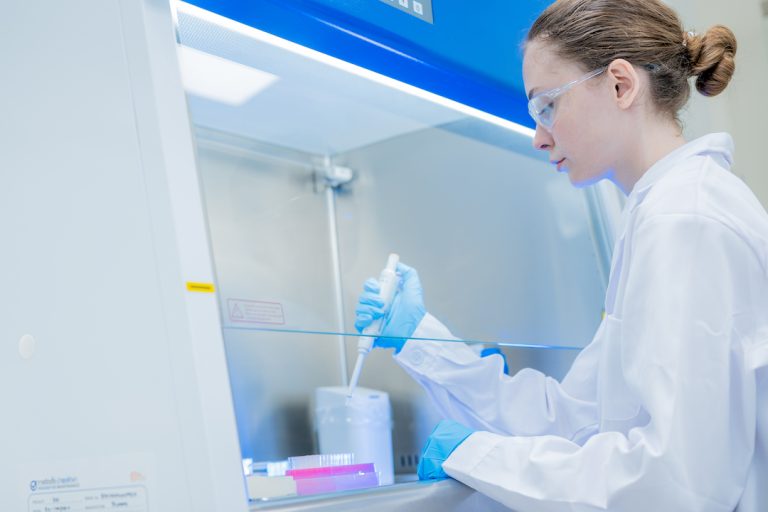
Before filing an IND, a drug developer must conduct a body of preclinical research — studies done in cell cultures and animal models to assess the drug’s basic safety profile and biological activity. This includes in vitro (laboratory) studies of mechanism of action and toxicity, and in vivo (animal) studies including dose-ranging and toxicology studies.
Preclinical work is designed to answer a fundamental question before human exposure: is there enough evidence of biological activity and a sufficient safety window to justify the risk of testing in humans? The FDA does not expect perfection in preclinical data — but it expects enough information to evaluate whether proceeding to human trials is reasonable.
What the IND Contains
An IND submission is organized into three main sections. The first is the animal pharmacology and toxicology section — the preclinical data the company is relying on to justify human testing. The second is the manufacturing information section, covering how the drug is made, its chemical and physical characteristics, and quality control standards. The third is the clinical protocols and investigator information section, which describes the proposed Phase 1 study design, patient eligibility criteria, safety monitoring plan, and the qualifications of the clinical investigators who will run the study.
The 30-Day FDA Review Window
Once an IND is filed, the FDA has 30 days to review it. If the agency has concerns — about safety, study design, or manufacturing quality — it can place a clinical hold on the IND, preventing trials from starting until the issues are resolved. If no clinical hold is issued by day 30, the company may begin its planned trials.
IND clearance (the absence of a hold) is not the same as FDA endorsement of the drug or the study. It simply means the agency has reviewed the submission and has not identified concerns serious enough to prevent the initial human study from proceeding. The drug will still need to pass through Phase 1, Phase 2, and Phase 3 before any approval can be sought.
Why IND Milestones Matter to Investors
For early-stage biotech companies, IND clearance is a legitimate milestone — it means the company has completed sufficient preclinical work to satisfy the FDA’s initial review, and it opens the path to clinical trial initiation. IND filing announcements and clearance confirmations are routinely disclosed in press releases and can be meaningful catalysts for pre-revenue companies whose value is almost entirely based on pipeline potential.
What This Does Not Guarantee
| IND clearance does not predict clinical success. The vast majority of drugs that receive IND clearance and begin Phase 1 trials never reach FDA approval. Preclinical data — even strong animal data — is a poor predictor of human efficacy and safety in many therapeutic areas. Investors should view IND clearance as a meaningful but early-stage milestone, not as evidence that a drug works in humans. |
Key Takeaways
- An IND (Investigational New Drug) application is the FDA submission that authorizes a company to begin human clinical trials
- It must be filed and cleared before any Phase 1, 2, or 3 trial can legally begin in the United States
- The IND contains preclinical safety data, manufacturing information, and the proposed clinical protocol
- The FDA has 30 days to review an IND and issue a clinical hold if it has concerns — if no hold is issued, the company may proceed
- IND clearance is not FDA endorsement of the drug — it simply means initial human testing can begin
- The IND requirement was established following the Kefauver Harris Amendment of 1962 in response to the thalidomide crisis
- For early-stage biotechs, IND filing and clearance are legitimate pipeline milestones but are far from a predictor of clinical success
Sources
1. FDA — Investigational New Drug (IND) Application: https://www.fda.gov/drugs/types-applications/investigational-new-drug-ind-application
2. FDA — IND Application Procedures: https://www.fda.gov/drugs/investigational-new-drug-ind-application/ind-application-procedures
3. ClinicalTrials.gov: https://clinicaltrials.gov
4. FDA — The Drug Development Process: https://www.fda.gov/patients/learn-about-drug-and-device-approvals/drug-development-process
Disclaimer
This article is based on publicly available regulatory information, company filings, and authoritative industry sources. All information was current as of the date of publication. BioTech Stocks Daily has not received compensation from any company referenced in this article in connection with this coverage.
This article contains references to forward-looking statements and clinical projections. Forward-looking statements involve known and unknown risks and uncertainties, and actual results may differ materially from those projected. Past clinical results do not guarantee future outcomes.
The information provided in this article is for informational and educational purposes only and does not constitute financial, investment, or medical advice. Readers are encouraged to conduct their own due diligence and consult a qualified financial advisor before making any investment decision.
For full terms, see our Disclaimer.