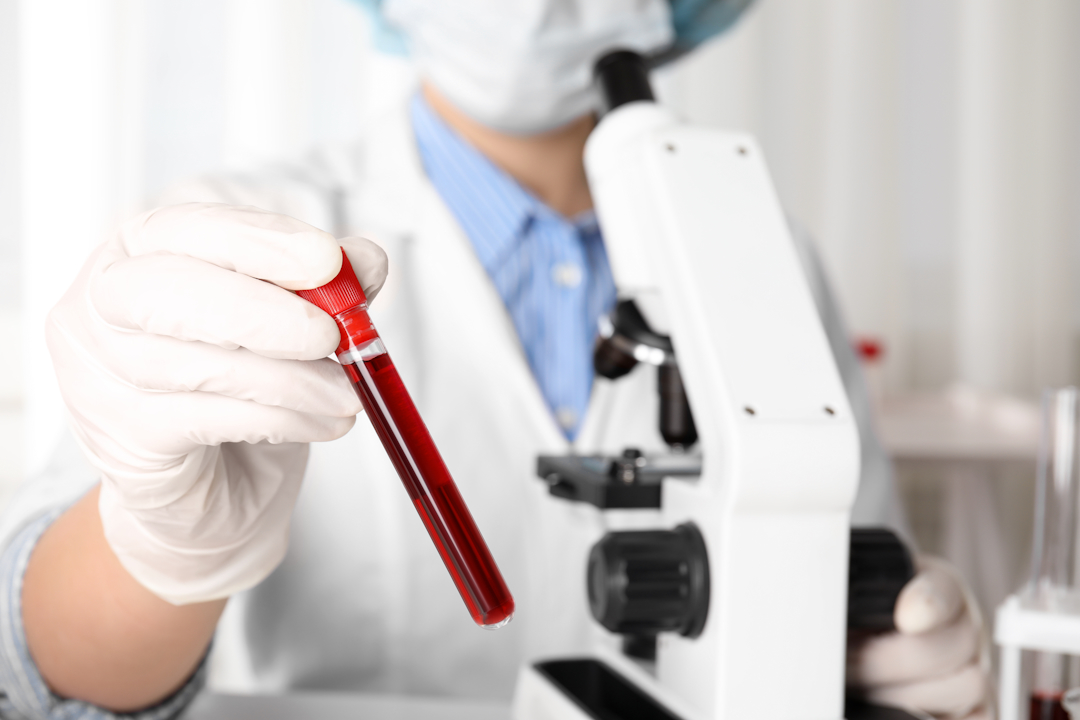
Traditional cancer diagnosis and monitoring has long relied on tissue biopsy — a surgical or needle procedure to physically remove a piece of tumor tissue for laboratory analysis. Liquid biopsy technology offers an alternative: detecting and characterizing cancer through a simple blood draw, by analyzing fragments of tumor DNA that circulate in the bloodstream. For biotech investors, liquid biopsy represents one of the most commercially significant and rapidly evolving areas of diagnostic technology, with applications spanning early cancer screening, treatment selection, and monitoring for disease recurrence.
The Short Answer
| A liquid biopsy is a diagnostic test that analyzes a blood sample — rather than a physical tissue biopsy — to detect and characterize cancer. The most common target is circulating tumor DNA (ctDNA), small fragments of DNA shed by tumor cells into the bloodstream as cells die and release their genetic contents. Liquid biopsy technology can be used to identify specific cancer-associated mutations to guide targeted therapy selection, detect residual cancer after treatment (minimal residual disease), monitor for disease recurrence, and in an emerging application, screen for cancer in patients without a prior diagnosis. |
From Concept to Clinical and Commercial Reality
The scientific basis for liquid biopsy rests on the discovery, dating back to the 1940s, that cell-free DNA circulates in human blood, and the later recognition in the 1990s and 2000s that tumors specifically shed detectable amounts of their DNA into circulation. The technical challenge that delayed clinical translation for decades was sensitivity: circulating tumor DNA typically represents a tiny fraction — often less than 1% — of the total cell-free DNA in a blood sample, particularly in patients with early-stage or minimal residual disease, requiring extremely sensitive sequencing technology to reliably detect.
The maturation of next-generation sequencing technology through the 2010s, combined with sophisticated bioinformatics approaches to distinguish genuine tumor-derived mutations from background noise and normal biological variation, made clinically useful liquid biopsy testing commercially viable. The FDA approved the first liquid biopsy companion diagnostic test in 2016, and the technology has since expanded rapidly into multiple clinical applications and a growing competitive commercial landscape.
Key Clinical Applications of Liquid Biopsy
Treatment selection is the most established application: identifying specific actionable mutations in a patient’s tumor DNA to guide targeted therapy selection, without requiring an invasive tissue biopsy. This is particularly valuable when tissue biopsy is difficult to obtain — some tumor locations are not easily accessible for repeated sampling — or when a patient’s disease has progressed and a new mutation profile needs to be assessed without a repeat invasive procedure.
Minimal residual disease (MRD) monitoring uses liquid biopsy to detect very low levels of remaining cancer DNA after surgery or treatment, before the disease would be detectable through imaging. Detecting MRD allows physicians to identify patients at high risk of recurrence earlier, potentially guiding decisions about additional adjuvant therapy. This application has generated significant clinical trial activity and is increasingly used as an early efficacy signal in oncology drug development itself.
Cancer screening — using liquid biopsy to detect cancer in individuals without a prior diagnosis or specific symptoms — is the newest and most ambitious application, aiming to identify multiple cancer types from a single blood draw before symptoms develop. This multi-cancer early detection (MCED) category faces the highest bar for clinical validation, as screening tests must demonstrate that early detection translates into meaningfully improved patient outcomes, not simply earlier awareness of disease.
Key Companies in the Liquid Biopsy Space
Guardant Health (NASDAQ: GH) is a leading commercial player in liquid biopsy for treatment selection and monitoring, with an expanding presence in earlier cancer detection. Exact Sciences (NASDAQ: EXAS), while known primarily for its Cologuard colorectal cancer screening test, has expanded into liquid biopsy technology through acquisitions. Grail, focused specifically on multi-cancer early detection, was spun out as an independent public company after a period under Illumina’s ownership, reflecting significant investor interest in and regulatory complexity around the MCED category specifically.
Why Liquid Biopsy Matters for Drug Developers, Not Just Diagnostics
Liquid biopsy technology has significant implications beyond standalone diagnostic companies — it is increasingly integrated into drug development itself. Pharmaceutical companies use liquid biopsy to identify biomarker-positive patients for enrollment in targeted therapy trials, to monitor treatment response through ctDNA changes as an early efficacy signal, and to detect emerging resistance mutations that inform combination therapy or next-generation drug strategies. This makes liquid biopsy technology relevant to evaluating oncology drug developers, not solely companies whose core business is the diagnostic test itself.
What This Does Not Guarantee
| Liquid biopsy technology does not guarantee accurate cancer detection in every case. Sensitivity remains a genuine technical limitation, particularly for early-stage cancers or small residual disease burdens, where the amount of circulating tumor DNA can be below the test’s detection threshold, producing false negatives. False positives — detecting mutations that do not represent clinically significant cancer, sometimes arising from age-related clonal blood cell mutations unrelated to solid tumors — are an active area of ongoing technical refinement. The multi-cancer early detection category in particular faces significant unresolved questions about the clinical benefit of earlier detection, which large prospective outcome studies are still working to establish. |
Key Takeaways
- Liquid biopsy analyzes circulating tumor DNA (ctDNA) in a blood sample to detect and characterize cancer, offering an alternative to invasive tissue biopsy
- The FDA approved the first liquid biopsy companion diagnostic in 2016, following advances in next-generation sequencing sensitivity through the 2010s
- Key applications include treatment selection (identifying actionable mutations), minimal residual disease monitoring (detecting recurrence risk before imaging can), and multi-cancer early detection (screening asymptomatic individuals)
- Leading companies include Guardant Health, Exact Sciences, and Grail, each with different areas of clinical and commercial focus
- Liquid biopsy is increasingly integrated into drug development itself — used for biomarker-driven trial enrollment and monitoring treatment response
- Sensitivity limitations remain a genuine technical challenge, particularly for early-stage cancers with minimal circulating tumor DNA
- Multi-cancer early detection faces the highest clinical validation bar — outcome studies must still establish that earlier detection improves patient survival
Sources
1. FDA — Liquid Biopsy Approvals: https://www.fda.gov/medical-devices/vitro-diagnostics/nucleic-acid-based-tests
2. NCI — Liquid Biopsy: https://www.cancer.gov/news-events/cancer-currents-blog/2022/liquid-biopsy-detecting-cancer-earlier
3. NIH — Circulating Tumor DNA: https://pubmed.ncbi.nlm.nih.gov
4. ClinicalTrials.gov: https://clinicaltrials.gov
Disclaimer
This article is based on publicly available regulatory information, company filings, and authoritative industry sources. All information was current as of the date of publication. BioTech Stocks Daily has not received compensation from any company referenced in this article in connection with this coverage.
This article contains references to forward-looking statements and clinical projections. Forward-looking statements involve known and unknown risks and uncertainties, and actual results may differ materially from those projected. Past clinical results do not guarantee future outcomes.
The information provided in this article is for informational and educational purposes only and does not constitute financial, investment, or medical advice. Readers are encouraged to conduct their own due diligence and consult a qualified financial advisor before making any investment decision.
For full terms, see our Disclaimer.