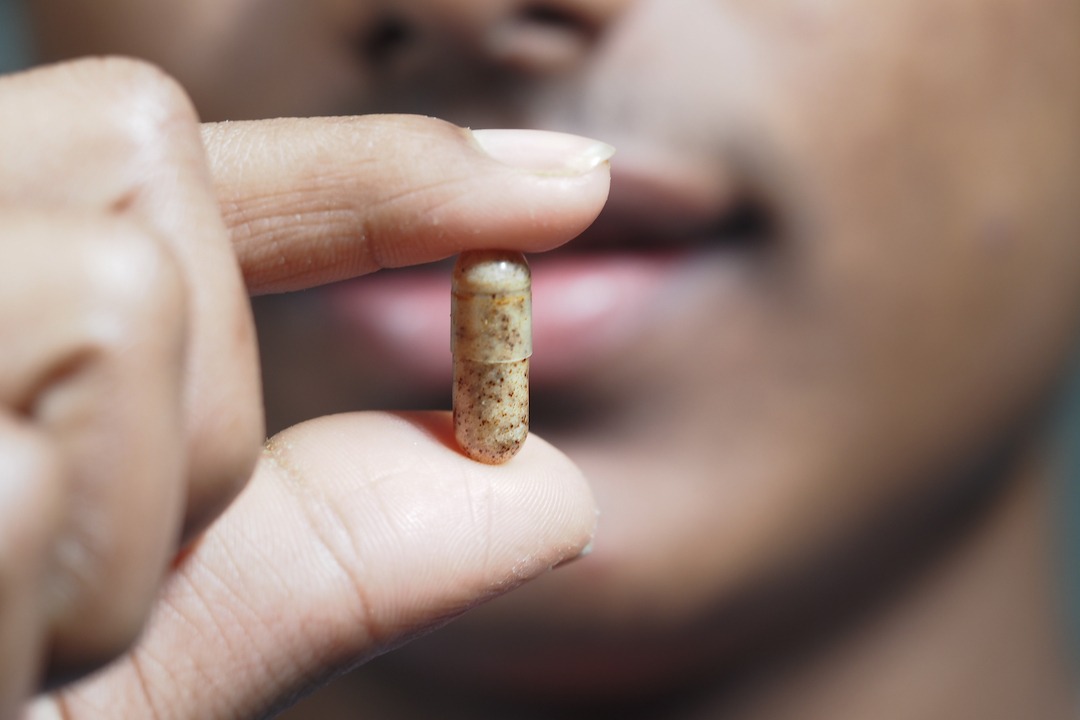
Ascletis Pharma Inc. (Hong Kong Stock Exchange: 1672) wants to turn obesity drugs that normally need a needle into a pill taken once a week. In a press release issued October 19, the company reported new animal data it says supports that goal across five oral peptide programs.
The key word is animal. Every number in the release comes from monkeys, dogs, or rats. No human data have been reported for any of the five candidates.
What Ascletis Reported
Peptides are short chains of amino acids, the same building blocks that make up proteins. Most of today’s obesity blockbusters, including semaglutide (Wegovy) and tirzepatide (Zepbound), are peptides. The gut breaks them down fast. That is why they are usually injected.
Ascletis says its in-house delivery technology, called POTENT, gets around part of that problem. In non-human primates (NHPs), its lead candidate, ASC36o, showed a half-life of up to about seven days. Half-life is how long the body takes to clear half of a dose, and a long one is what makes weekly dosing plausible. Oral bioavailability, the share of a swallowed dose that actually reaches the bloodstream, came in at 6% to 8%.
ASC36o mimics amylin, a hormone released alongside insulin after meals that helps signal fullness. Amylin drugs are one of the busiest corners of obesity research right now.
The newer data cover two fixed-dose combinations (FDCs), meaning two drugs in a single tablet. ASC36_37o FDC pairs ASC36 with a peptide that hits GLP-1, GIP and glucagon receptors, for four targets in total. ASC36_35o FDC pairs it with a GLP-1/GIP peptide, for three. In monkeys, the company said, combining the peptides stretched ASC36’s half-life to roughly 8.8 days in one FDC and 8.3 days in the other. Bioavailability of the amylin component rose to 10% or more in both.
The Fine Print
Several details are easy to miss.
Start with the rat study. The release says ASC36 cut body weight 32% more than Eli Lilly’s eloralintide and 91% more than petrelintide, from Roche and Zealand Pharma, in a head-to-head test in diet-induced obese rats. It does not say how the drugs were given. Ascletis’ September 8 filing with the Hong Kong exchange does. ASC36 was dosed by subcutaneous injection, not as a tablet, and the study ran seven days. That result says nothing directly about the pill.
Then the half-life. The release quotes only the top figure, 167 hours. The September filing shows that number came from a 25 mg dose. At 10 mg, the half-life was 116 hours, under five days. The same filing described the monkey data as supporting once-daily and less frequent dosing. The once-weekly framing is new.
The Phase I trial is not new either. Ascletis announced the start of its U.S. ASC36o study, an 86-participant trial testing single and multiple rising doses, on September 8. Topline human pharmacokinetic data, meaning how the drug is absorbed and cleared in people, are expected by the end of 2026.
The release also leaves out animal counts, statistical analysis, and any weight-loss results for the oral combination tablets. For ASC35o, it gives no bioavailability number at all, only a comparison to ASC37o.
Checking the “First” Claim
Founder and CEO Jinzi Jason Wu said the two FDC tablets are, to the company’s knowledge, the first once-weekly oral peptide combinations. He also called the pipeline the most comprehensive in the industry. Both are the company’s own characterizations.
The field is more crowded than that suggests. Privately held Verdiva Bio began a Phase 1 study in July 2026 of VRB-103, a once-weekly oral amylin analog being tested alone and alongside its once-weekly oral GLP-1, VRB-101. Verdiva presented preclinical data on a single-tablet co-formulation of the two back in 2025. Separately, Gan & Lee Pharmaceuticals dosed the first person with its once-weekly oral GLP-1 peptide, GZC8072, in September. Whether Ascletis is first depends on how narrowly “first” is drawn.
Why Bioavailability Matters
Oral peptides have a well-known efficiency problem. Novo Nordisk’s Wegovy pill, the oral semaglutide approved by the FDA for weight management in December 2025, reaches the bloodstream at roughly 0.4% to 1% in humans. The injection is about 89%. So the pill needs 25 mg of drug to do what 2.4 mg does by needle.
A 6% to 10% figure would be a big step up. But Ascletis’ numbers come from monkeys, and absorption in animals often fails to carry over cleanly to people. Lining up one drug’s monkey data against another drug’s human data is a cross-study comparison, not a head-to-head test. The Phase I readout is the first real check.
The Competitive Picture
Two daily oral GLP-1 pills are already approved in the U.S. for obesity: the Wegovy pill and Lilly’s small-molecule orforglipron, sold as Foundayo, which won approval on April 1, 2026.
In amylin, the leaders are weekly injections. Lilly’s eloralintide is being readied for Phase 3. Roche and Zealand planned to start Phase 3 trials of petrelintide in the second half of 2026.
Ascletis has a more mature obesity asset elsewhere. The company has said it started a global Phase III program for ASC30, its once-daily oral small-molecule GLP-1.
What Comes Next
Ascletis expects to file Investigational New Drug (IND) applications with the FDA for its four other oral peptide programs in the fourth quarter of 2026. An IND is a request to begin human testing. Filing one is not the same as clearance.
None of these drugs is approved, and none has shown it works in people. For now, this is a platform story built on animal pharmacology. The ASC36o human data due by year-end will say a lot more.
Sources
- Ascletis Pharma Inc.: Ascletis Announces Positive Preclinical Data for the Most Comprehensive Once-Weekly Oral Peptide Pipeline for the Treatment of Obesity, PRNewswire, October 19, 2026. Primary source release.
- Ascletis Pharma Inc. Voluntary Announcement: Initiation of Phase I Study in U.S. for Oral Amylin Receptor Peptide Agonist ASC36 (HKEX filing), September 8, 2026, cited for the subcutaneous dosing route and seven-day length of the rat study, the dose-specific half-life figures, the original once-daily framing, and the 86-participant Phase I design, none of which appeared in the October release.
- BioPharm International: Ascletis Begins Phase I Studies of Amylin Agonist ASC36 and Its GLP-1/GIP Co-Formulation for Obesity, cited for Ascletis’ statement that it has initiated a global Phase III program for ASC30.
- Verdiva Bio Initiates Phase 1 Study of VRB-103, a Selective Oral Amylin Peptide Analog With Weekly Dosing Potential, Business Wire, July 30, 2026, cited for a competing once-weekly oral amylin program in combination with an oral GLP-1.
- Verdiva Bio to Present New Data Highlighting Once-Weekly Potential of Its Investigational Oral Obesity Candidates at the ADA 85th Scientific Sessions, Business Wire, June 2025, cited for earlier preclinical single-tablet co-formulation data.
- Gan & Lee Pharmaceuticals: First Participant Dosed in First-in-Human Phase 1 Study of GZC8072, September 9, 2026, cited for a competing once-weekly oral GLP-1 peptide in clinical development.
- Pharmacy Times: FDA Approves First Oral GLP-1 for Weight Management, December 23, 2025, cited for the Wegovy pill approval.
- Epocrates: FDA Approves Oral Wegovy Pill for Weight Loss, cited for the 25 mg oral versus 2.4 mg injectable semaglutide doses.
- Journal of Controlled Release: Effects of SNAC-Enabled Oral Semaglutide Delivery, cited for oral semaglutide’s 0.4% to 1% bioavailability.
- Quantifying the Value of Orally Delivered Biologic Therapies: A Cost-Effectiveness Analysis of Oral Semaglutide (PMC), cited for the roughly 89% bioavailability of injectable semaglutide.
- Healio: FDA Approves Foundayo, an Oral GLP-1, for Adults With Obesity, April 1, 2026, cited for the orforglipron approval.
- BioPharm International: Zealand Pharma and Roche Advance Petrelintide to Phase 3 for Chronic Weight Management, April 30, 2026, cited for petrelintide’s Phase 3 timing.
- AllSci: Roche Partner Zealand’s Phase II Data for Petrelintide Shows Placebo-Like Safety, cited for eloralintide’s development status.
Editorial Disclosure
This article reports on preclinical data announced by Ascletis Pharma Inc. in a press release issued October 19, 2026, regarding its once-weekly oral peptide pipeline for obesity. Securities discussed: Ascletis Pharma Inc. (Hong Kong Stock Exchange: 1672). Other companies referenced for competitive context include Novo Nordisk, Eli Lilly, Roche, Zealand Pharma, Gan & Lee Pharmaceuticals, and privately held Verdiva Bio. BioTech Stocks Daily has not received, nor will it accept, any compensation, direct or indirect, from Ascletis Pharma or any other corporate or third-party sponsor for the preparation or publication of this coverage. No staff member, principal, or affiliate of BioTech Stocks Daily holds a position, option, or financial interest in any of the securities mentioned as of the date of publication. Details on the rat study’s dosing route, dose-specific half-life figures, and Phase I design were drawn from Ascletis’ September 8, 2026 Hong Kong Stock Exchange filing, and competitive-landscape context from the independent sources cited above, since the original release did not address these points. All efficacy and pharmacokinetic data described are preclinical (animal) results and may not predict outcomes in humans. Statements regarding topline human pharmacokinetic data expected by the end of 2026, planned IND submissions in the fourth quarter of 2026, the feasibility of once-weekly oral dosing in humans, and potential commercial competition are forward-looking statements. They involve substantial risks, regulatory uncertainties, and scientific variables; actual clinical outcomes, development timelines, and regulatory decisions may differ materially. Clinical-stage biotechnology investments carry an extreme degree of financial risk. Drug development is subject to high rates of clinical failure, regulatory rejection, and market competition, which can result in the total loss of invested capital. This article is published strictly for independent news reporting, market context, and educational purposes only. It does not constitute an investment recommendation, endorsement, or professional financial, legal, or tax advice. Furthermore, this content is not medical advice; patients and healthcare providers should consult appropriate clinical professionals for medical guidance.
For full details regarding our editorial independence, publishing policies, and comprehensive risk disclaimers, see our full DISCLAIMER.