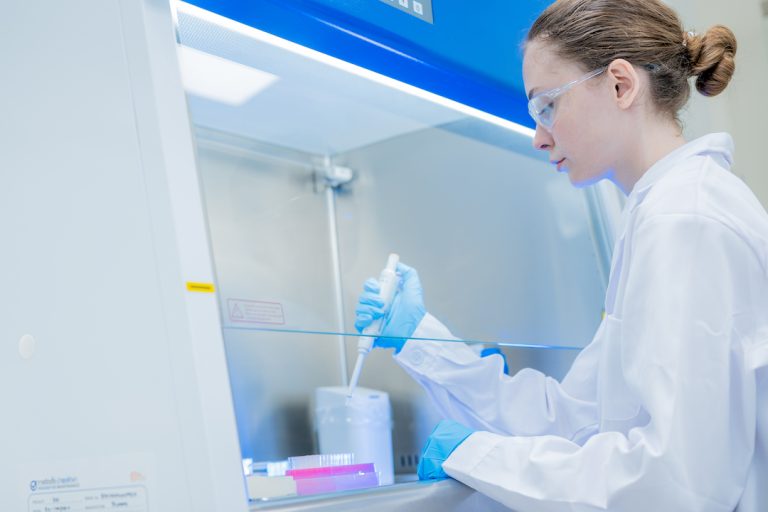
Merry Life Biomedical, a privately held Taiwan biotechnology company, announced Sept. 21 that its investigational Alzheimer’s pill TML-6 is advancing in a global Phase 2 study now spanning 20 clinical sites in Taiwan, Sweden, and the United States. The trial will enroll about 210 people with early Alzheimer’s disease, testing whether a drug built around the brain’s own cellular cleanup system can slow the disease in a field where two already-approved antibody infusions currently dominate treatment.
That timing matters. Lecanemab (Leqembi) and donanemab (Kisunla) already have full FDA approval for early Alzheimer’s disease, and both work by clearing amyloid plaque directly. TML-6 takes a different route, and any results it eventually produces will be judged against drugs already on the market, not against a blank slate. Alzheimer’s disease affects an estimated 7.4 million Americans age 65 and older, according to the Alzheimer’s Association, and even with the newer amyloid-clearing drugs available, the underlying disease keeps progressing, which is part of why companies keep looking for other angles of attack.
What the Trial Will Test
The study is registered with the U.S. National Institutes of Health as NCT07612150, a detail the company’s release did not include. It is a randomized, double-blind, placebo-controlled design: participants receive TML-6 at 100 milligrams, TML-6 at 200 milligrams, or placebo, once daily for 52 weeks. The main measure is change in the Clinical Dementia Rating Sum of Boxes, or CDR-SB, a standard scale that scores memory, judgment, and daily function across six categories. Secondary measures include blood tests for four biomarkers tied to Alzheimer’s biology: p-Tau 217, amyloid-beta (Aβ), GFAP, and NfL, each a proxy for a different piece of the disease process, from tau tangles to nerve-cell injury.
A Different Biological Target
Where lecanemab and donanemab are lab-made antibodies that bind and help clear amyloid plaque from outside brain cells, TML-6 works on a system inside them. The release describes the target as the autophagy-lysosomal pathway, the machinery neurons and support cells called microglia use to break down and recycle damaged proteins and worn-out cellular parts. The company’s premise is that Alzheimer’s involves not just protein buildup, but a breakdown in the cell’s own ability to clear that buildup in the first place. Separately, ClinicalTrials.gov’s own description of the study identifies TML-6 as a synthetic curcumin analog, a chemical relative of the compound found in turmeric, a detail the company’s release also left out, and one that ties TML-6 to a broader, still-unproven category of natural-compound-derived neurodegeneration drugs.
Entering an Already-Approved Field
TML-6 is not stepping into an empty market. Lecanemab received full FDA approval in 2023 and donanemab in 2024, both for people with mild cognitive impairment or mild dementia from confirmed Alzheimer’s disease, and both have shown they can measurably slow, though not stop or reverse, cognitive decline. TML-6 has no efficacy data of its own yet. The company’s earlier Phase 1 results, reported in February, described the drug as generally well tolerated in healthy and older adults, a safety finding, not a sign that it works. The current release frames TML-6 as a possible complement to amyloid-clearing drugs rather than a competitor to them, but that framing is the company’s own and has not been tested in patients taking both together.
The Team Running the Study
Nine of the 20 sites are in Taiwan, the largest single-country group in the trial. Seven are in Sweden, led by Anne Börjesson-Hanson, MD, PhD, whose Karolinska Institute faculty listing confirms her as an active investigator across a string of international Alzheimer’s trials. Four sites are in the United States. Henrik Zetterberg is named to support the blood-biomarker analyses, Barbara Bendlin to handle amyloid PET and MRI imaging, and Gary Small and Jacobo Mintzer serve as consultants on global medical strategy and site execution, respectively. Börjesson-Hanson is scheduled to speak at the Taiwan Dementia Society’s annual meeting on October 4 and meet with the trial’s Taiwanese investigators while there.
What Wasn’t Disclosed
The release gives no target date for finishing enrollment of the planned 210 participants, and as of the trial registry’s last public update, the study had not yet begun recruiting patients. It also gives no detail on deal terms for any future licensing or partnership arrangement, since none has been reached. Readers should treat TML-6 as a Phase 2 candidate with a Phase 1 safety record and a testable, but unproven, biological hypothesis, not as a therapy with demonstrated benefit for patients.
Sources
Merry Life Biomedical: Merry Life Biomedical Advances Global Phase 2 Trial of TML-6, Exploring Cellular Protein Clearance in Early Alzheimer’s Disease, PRNewswire, September 21, 2026. Primary source release.
ClinicalTrials.gov: A Study to Evaluate the Safety, Tolerability, and Efficacy of TML-6 in Participants With Early Alzheimer’s Disease (NCT07612150), cited for the trial’s registered design and endpoints and its description of TML-6 as a synthetic curcumin analog, none of which appeared in the press release.
Alzheimer’s Association: Lecanemab Approved for Treatment of Early Alzheimer’s Disease, cited for competitive-landscape context on the FDA-approved status of lecanemab (Leqembi) and donanemab (Kisunla).
Alzheimer’s Association: 2026 Alzheimer’s Disease Facts and Figures, cited for the estimated number of Americans living with Alzheimer’s disease.
Karolinska Institute: Faculty Listing for Anne Börjesson-Hanson, cited to independently confirm Dr. Börjesson-Hanson’s Karolinska Institute affiliation.
FINDIT (Taiwan): Merry Life Biomedical Co., Ltd. Company Profile, cited to confirm Merry Life Biomedical’s status as a privately held company with no listed stock ticker.
Editorial Disclosure
This article is based on a press release issued by Merry Life Biomedical on September 21, 2026. BioTech Stocks Daily was not compensated for this coverage. Statements regarding future products, clinical trial outcomes, regulatory decisions, performance, revenue, or market opportunity are forward-looking and involve risks and uncertainties; actual results may differ materially. Merry Life Biomedical is a privately held company; it currently has no publicly traded stock, and this article does not identify any securities available for purchase. This article also draws on the trial’s registration on ClinicalTrials.gov, the Karolinska Institute’s faculty listing for Dr. Anne Börjesson-Hanson, and independent, publicly available information on the FDA-approved status of lecanemab and donanemab and on U.S. Alzheimer’s disease prevalence, none of which appeared in the original release. This article is for informational and educational purposes only, does not constitute investment advice, and is not medical advice. Consult a qualified healthcare professional for medical guidance. See our full DISCLAIMER.